
Reintegration of Returnee Migrant Workers
About REMI
Returnee Migrant Reintegration (ReMi) Project is a bilateral initiative between the Governments of Nepal and Switzerland, providing critical support through technical assistance and coordinated services.
Reintegration of Returnee Migrant Workers (ReMi) Project is a bilateral initiative between Governments of Nepal and Switzerland. It is implemented by the Ministry of Labor, Employment and Social Security (MoLESS), respective provincial line ministries (Province Koshi and Madhesh Province) and 20 participating local governments. The project is funded by the Swiss Agency for Development and Cooperation (SDC). Helvetas Nepal provides technical assistance to the project on behalf of the Swiss Agency for Development and Cooperation (SDC).
The ReMi project duration of the first phase is from 16th July 2022 till 15th July 2026. The overall goal of the project is that returnee migrant workers in Nepal have re-established themselves and actively participate in social, cultural, economic and political life.
Project Beneficiaries
- Primary Beneficiaries
Men and women returnee migrant workers (RMWs) who are returning to Nepal from country of destinations, primarily the Gulf Cooperation Council (GCC) countries and Malaysia.
- Secondary Beneficiaries
Service providers and private sector actors (private companies, cooperatives, civil society organizations). The ReMi project will cooperate with these actors and institutions on effective reintegration support services as well as the policy framework to institutionalize these multi-sectoral services. It will work with elected representatives at local and provincial level to strengthen their capacities in intergovernmental coordination and policy making.
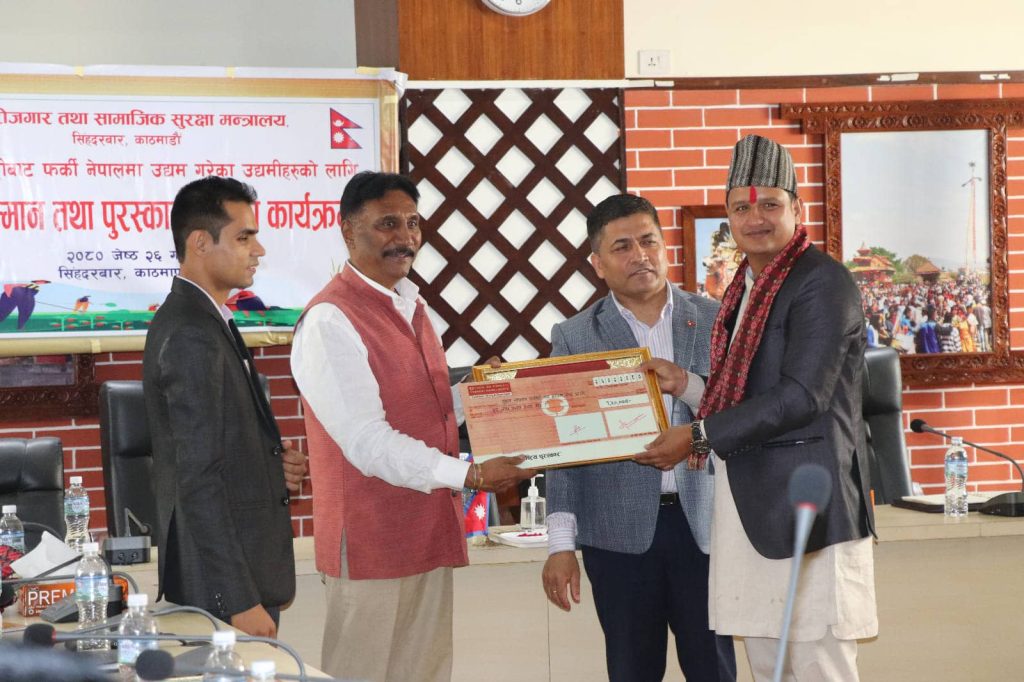
Active Reintegration
A returnee migrant supported by the project

Skills & Opportunity
Training for dignified livelihoods
Framework & Alignment
Policies and Directives
The project contributes to the implementation of the following policies and directives of the Government of Nepal.
Fundamental Rights, Article 33 on Right to Employment
• Every citizen shall have the right to employment and shall have
the right to choose employment
Policies relating to Labour and Employment, Article 51 (i)
• To encourage to mobilise the capital, skills, technology and
experience gained from foreign employment in productive sectors
in the country
• Returnee migrant workers will be encouraged to start businesses by providing support in terms of technology, technical expertise, and finance (5.6 Entrepreneurship Development)
• Knowledge, skills, and experience gained from foreign employment will be certified and used in entrepreneurship development (10.3 Labor and Employment)
The federal, provincial and local governments of Nepal shall conduct necessary employment programmes to provide the unemployed person
with minimum employment - Programme scope:
a. Providing information relating to employment opportunities,
b. Providing employment-oriented and skill-oriented trainings,
c. Providing soft loan for self-employment through banks and financial institutions,
d. Creating self-employment,
e. Conducting other programmes as prescribed. · Local government
Employment Service Centres – information on employment opportunities, linking unemployed to job opportunities, skill and employment specific training, access to soft loans, support to self employment, maintenance of unemployed records.
Mandates the Foreign Employment Board with responsibility for reintegration through use of the foreign employment welfare fund for skill and entrepreneurship training of returnees, for employment programmes and safe houses for women returnee migrants in distress and to plan and implement programmes for capitalization of returnee migrant skills and knowledge.
Execution of concurrent jurisdiction – the following matters shall be according to provincial law employment promotion, entrepreneurship
development, social security; · Coordination and consultation between GoN and provincial governments while formulating laws and policies on matters of concurrent powers; · Intergovernmental
coordination councils (National Coordination Council and Provincial Coordination Council) and Thematic Committees (sectoral coordination).
Socialization programme
Entrepreneurship Promotion Programme
Involvement in Employment Programme
Section 3, Sub section 2: Labour and Employment Oriented Services
a) Information collection, coordination, employment generation and posting in employment.
(b) Coordination and operation of skill-based and capacity development activities.
(d) Activities relating to social and economic reintegration of workers returning from foreign employment.
(e) Assistance in entrepreneurship development and business planning for self-employment.
(f) To operate and update the details of labour and employment related information systems accessible at the local level.
Section 23 : Providing services related to reintegration: The Employment Service Center will have to conduct activities related to socio-economic and family reunification or reintegration to the workers or their families returning from foreign employment in
Reintegration and Economic Mobility through Inclusive Public Employment Services (ReMi) – Phase II
Building on the achievements of Phase I, ReMi Phase II expands its efforts to strengthen inclusive employment services and sustainable reintegration support for returnee migrant workers across Nepal. The project promotes stronger collaboration among federal, provincial, and local governments while enhancing partnerships with the private sector to create better employment opportunities and long-term economic resilience.
Project Beneficiaries
- Primary Beneficiaries
Men and women returnee migrant workers (RMWs) who are returning to Nepal from country of destinations, primarily the Gulf Cooperation Council (GCC) countries and Malaysia.
- Secondary Beneficiaries
Service providers and private sector actors (private companies, cooperatives, civil society organizations). The ReMi project will cooperate with these actors and institutions on effective reintegration support services as well as the policy framework to institutionalize these multi-sectoral services. It will work with elected representatives at local and provincial level to strengthen their capacities in intergovernmental coordination and policy making.
Active Reintegration
A returnee migrant supported by the project
Skills & Opportunity
Training for dignified livelihoods
Framework & Alignment
Policies and Directives
The project contributes to the implementation of the following policies and directives of the Government of Nepal.
Fundamental Rights, Article 33 on Right to Employment
• Every citizen shall have the right to employment and shall have
the right to choose employment
Policies relating to Labour and Employment, Article 51 (i)
• To encourage to mobilise the capital, skills, technology and
experience gained from foreign employment in productive sectors
in the country
• Returnee migrant workers will be encouraged to start businesses by providing support in terms of technology, technical expertise, and finance (5.6 Entrepreneurship Development)
• Knowledge, skills, and experience gained from foreign employment will be certified and used in entrepreneurship development (10.3 Labor and Employment)
The federal, provincial and local governments of Nepal shall conduct necessary employment programmes to provide the unemployed person
with minimum employment - Programme scope:
a. Providing information relating to employment opportunities,
b. Providing employment-oriented and skill-oriented trainings,
c. Providing soft loan for self-employment through banks and financial institutions,
d. Creating self-employment,
e. Conducting other programmes as prescribed. · Local government
Employment Service Centres – information on employment opportunities, linking unemployed to job opportunities, skill and employment specific training, access to soft loans, support to self employment, maintenance of unemployed records.
Mandates the Foreign Employment Board with responsibility for reintegration through use of the foreign employment welfare fund for skill and entrepreneurship training of returnees, for employment programmes and safe houses for women returnee migrants in distress and to plan and implement programmes for capitalization of returnee migrant skills and knowledge.
Execution of concurrent jurisdiction – the following matters shall be according to provincial law employment promotion, entrepreneurship
development, social security; · Coordination and consultation between GoN and provincial governments while formulating laws and policies on matters of concurrent powers; · Intergovernmental
coordination councils (National Coordination Council and Provincial Coordination Council) and Thematic Committees (sectoral coordination).
Socialization programme
Entrepreneurship Promotion Programme
Involvement in Employment Programme
Section 3, Sub section 2: Labour and Employment Oriented Services
a) Information collection, coordination, employment generation and posting in employment.
(b) Coordination and operation of skill-based and capacity development activities.
(d) Activities relating to social and economic reintegration of workers returning from foreign employment.
(e) Assistance in entrepreneurship development and business planning for self-employment.
(f) To operate and update the details of labour and employment related information systems accessible at the local level.
Section 23 : Providing services related to reintegration: The Employment Service Center will have to conduct activities related to socio-economic and family reunification or reintegration to the workers or their families returning from foreign employment in
Reintegration of Returnee Migrant Workers (ReMi) Project is a bilateral initiative between Governments of Nepal and Switzerland. It is implemented by the Ministry of Labor, Employment and Social Security (MoLESS), respective provincial line ministries (Province Koshi and Madhesh Province) and 20 participating local governments. The project is funded by the Swiss Agency for Development and Cooperation (SDC). Helvetas Nepal provides technical assistance to the project on behalf of the Swiss Agency for Development and Cooperation (SDC).
The ReMi project duration of the first phase is from 16th July 2022 till 15th July 2026. The overall goal of the project is that returnee migrant workers in Nepal have re-established themselves and actively participate in social, cultural, economic and political life.
Project Beneficiaries
- Primary Beneficiaries
Men and women returnee migrant workers (RMWs) who are returning to Nepal from country of destinations, primarily the Gulf Cooperation Council (GCC) countries and Malaysia.
- Secondary Beneficiaries
Service providers and private sector actors (private companies, cooperatives, civil society organizations). The ReMi project will cooperate with these actors and institutions on effective reintegration support services as well as the policy framework to institutionalize these multi-sectoral services. It will work with elected representatives at local and provincial level to strengthen their capacities in intergovernmental coordination and policy making.
Active Reintegration
A returnee migrant supported by the project
Skills & Opportunity
Training for dignified livelihoods
Framework & Alignment
Policies and Directives
The project contributes to the implementation of the following policies and directives of the Government of Nepal.
Fundamental Rights, Article 33 on Right to Employment
• Every citizen shall have the right to employment and shall have
the right to choose employment
Policies relating to Labour and Employment, Article 51 (i)
• To encourage to mobilise the capital, skills, technology and
experience gained from foreign employment in productive sectors
in the country
• Returnee migrant workers will be encouraged to start businesses by providing support in terms of technology, technical expertise, and finance (5.6 Entrepreneurship Development)
• Knowledge, skills, and experience gained from foreign employment will be certified and used in entrepreneurship development (10.3 Labor and Employment)
The federal, provincial and local governments of Nepal shall conduct necessary employment programmes to provide the unemployed person
with minimum employment - Programme scope:
a. Providing information relating to employment opportunities,
b. Providing employment-oriented and skill-oriented trainings,
c. Providing soft loan for self-employment through banks and financial institutions,
d. Creating self-employment,
e. Conducting other programmes as prescribed. · Local government
Employment Service Centres – information on employment opportunities, linking unemployed to job opportunities, skill and employment specific training, access to soft loans, support to self employment, maintenance of unemployed records.
Mandates the Foreign Employment Board with responsibility for reintegration through use of the foreign employment welfare fund for skill and entrepreneurship training of returnees, for employment programmes and safe houses for women returnee migrants in distress and to plan and implement programmes for capitalization of returnee migrant skills and knowledge.
Execution of concurrent jurisdiction – the following matters shall be according to provincial law employment promotion, entrepreneurship
development, social security; · Coordination and consultation between GoN and provincial governments while formulating laws and policies on matters of concurrent powers; · Intergovernmental
coordination councils (National Coordination Council and Provincial Coordination Council) and Thematic Committees (sectoral coordination).
Socialization programme
Entrepreneurship Promotion Programme
Involvement in Employment Programme
Section 3, Sub section 2: Labour and Employment Oriented Services
a) Information collection, coordination, employment generation and posting in employment.
(b) Coordination and operation of skill-based and capacity development activities.
(d) Activities relating to social and economic reintegration of workers returning from foreign employment.
(e) Assistance in entrepreneurship development and business planning for self-employment.
(f) To operate and update the details of labour and employment related information systems accessible at the local level.
Section 23 : Providing services related to reintegration: The Employment Service Center will have to conduct activities related to socio-economic and family reunification or reintegration to the workers or their families returning from foreign employment in